The Political Economy of Mental Illness in South Africa by André J van Rensburg
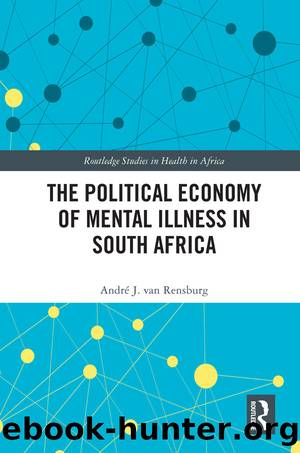
Author:André J van Rensburg [Rensburg, André J van]
Language: eng
Format: epub
ISBN: 9780367192631
Barnesnoble:
Publisher: Taylor & Francis
Published: 2021-02-18T00:00:00+00:00
Process design
Process design: Formal authority and resources
Collaborative processes were significantly state-owned. This is apparent in the dependence of NGOs on state funding, administrative and legislative support, as well as the hierarchical nature of referral patterns according to levels of public health care. No formal agreements were in place, and collaboration occurred in a piecemeal, informal fashion, dependent on key actors in health facilities to reach out to others in order to extend the scope of care for patients suffering from mental illness. It was expected that NGOs refer patients in need of clinical treatment to public facilities, or in rare cases where patients had appropriate medical insurance, to a private psychiatric institution. Public facilities, in turn, were expected to refer patients to relevant NGOs according to geographical access and specific needs. Expectations between public and private service providers generally depended on the specifics of collaborative relationships. In general, the expectation was that public facilities provide clinical treatment, while NGOs provide different types of social care â including housing, treatment adherence support, psychosocial rehabilitation and psychotherapy, and drug and alcohol rehabilitation. Participants from NGOs frequently visited public facilities while accompanying patients in their care, while public participants rarely ventured out of the public service provision sphere. The responsibility to initiate and foster collaboration with non-state service providers was the stateâs responsibility, both by public and private participants.
Instances of conflict among NGOs and public facilities emerged in administration of correct paperwork and patientsâ personal identifying documentation. The importance of this expectation was tied to both NGOs and their clientsâ dependence on social welfare grants, a procedure that relies heavily on correct documentation. Public participants expected NGOs to bring identification and medical documentation with them during visits, sending NGOs back if documents were absent. Given the processing and governance value of such documentation in health care access, this expectation placed public facilities (with their clinical expertise) in an advantageous position. In turn, NGOs provided information of their services to public collaborators. In one collaborative case, a public psychiatric hospital obtained information on types of therapy and psychosocial support groups available from an NGO, so that they could refer patients accordingly.
Meetings between public and non-state collaborating partners differed substantially, ranging from informal telephonic contact to regular formal face-to-face meetings. The psychiatric hospital offered a yearly catered social as a way of thanking NGOs for their efforts. The most prominent space for contact was a quarterly mental health district forum, held at and paid for by the DoH provincial headquarters. Selected non-state service providers in the service network were invited and participated. While many public participants felt that this meeting proved an opportunity for collaboration, private participants seemed less encouraged about the effectiveness of these meetings. Some went as far as to describe the meetings as political grandstanding, having no clear structure, aims and outcomes, stating:
If you look at what is said in Batho Pele [national patient rights charter] that every person has a right, have a right to best health services that he can get.
Download
This site does not store any files on its server. We only index and link to content provided by other sites. Please contact the content providers to delete copyright contents if any and email us, we'll remove relevant links or contents immediately.
| Anthropology | Archaeology |
| Philosophy | Politics & Government |
| Social Sciences | Sociology |
| Women's Studies |
Cecilia; Or, Memoirs of an Heiress — Volume 1 by Fanny Burney(32654)
The Great Music City by Andrea Baker(32620)
Cecilia; Or, Memoirs of an Heiress — Volume 2 by Fanny Burney(32023)
Cecilia; Or, Memoirs of an Heiress — Volume 3 by Fanny Burney(32005)
We're Going to Need More Wine by Gabrielle Union(19121)
All the Missing Girls by Megan Miranda(16409)
Pimp by Iceberg Slim(14711)
For the Love of Europe by Rick Steves(14658)
Bombshells: Glamour Girls of a Lifetime by Sullivan Steve(14152)
Norse Mythology by Gaiman Neil(13472)
Talking to Strangers by Malcolm Gladwell(13472)
Fifty Shades Freed by E L James(13305)
Mindhunter: Inside the FBI's Elite Serial Crime Unit by John E. Douglas & Mark Olshaker(9446)
Crazy Rich Asians by Kevin Kwan(9359)
The Lost Art of Listening by Michael P. Nichols(7568)
Enlightenment Now: The Case for Reason, Science, Humanism, and Progress by Steven Pinker(7368)
The Four Agreements by Don Miguel Ruiz(6852)
Bad Blood by John Carreyrou(6683)
Weapons of Math Destruction by Cathy O'Neil(6386)
